
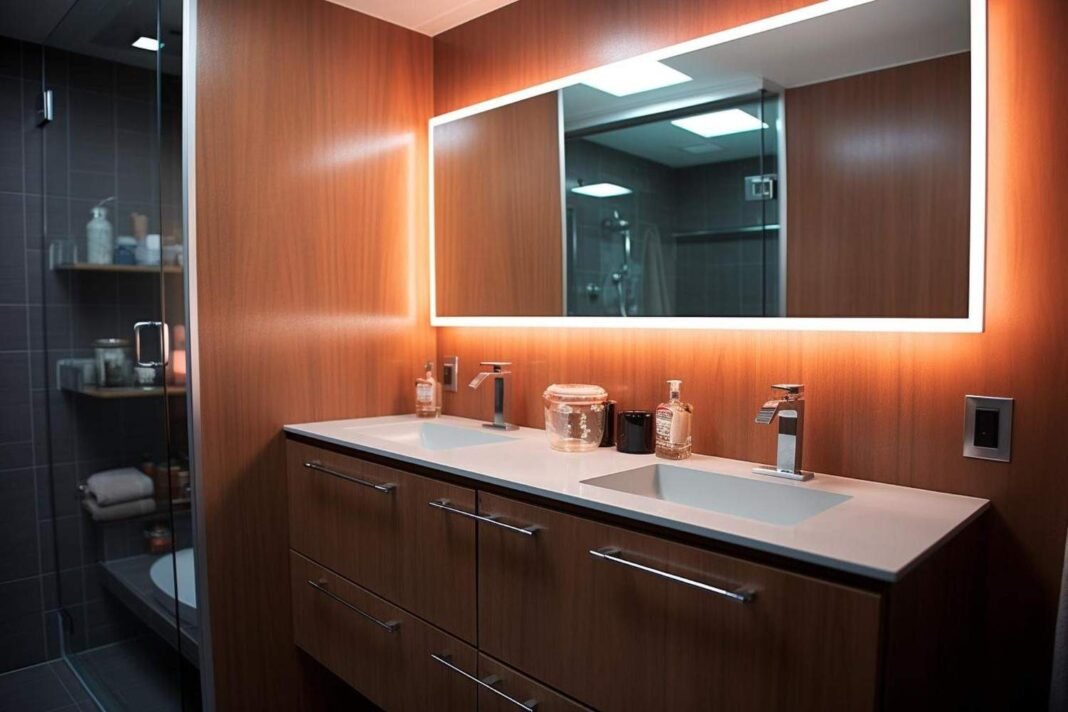

In a small bathroom, every inch is contested. The vanity, the towel bar, the door swing, and the person standing at the sink are all competing for the same few square feet. So when a fixture can give you real storage without taking up any floor or air space, it is worth a serious look. That is the whole pitch for a recessed medicine cabinet.
If your bathroom feels tight and your counter is always cluttered, this is one of the most effective fixes available.
The small-bathroom storage squeeze
Small bathrooms rarely have room for a linen closet or a freestanding cabinet. So everything you own ends up either on the counter or crammed under the sink around the plumbing. The counter clutter makes the room feel even smaller than it is, and the under-sink chaos means you can never find anything.
The wall above the sink is usually the one piece of real estate going to waste. A recessed cabinet puts it to work.
What “recessed” actually means
A recessed medicine cabinet installs into the wall rather than onto it. The body of the cabinet sits inside the wall cavity, between the framing, so only the door and a thin frame stick out. The result is nearly flush with the wall, like a window into hidden storage.
Compare that to a surface-mounted cabinet, which hangs on the wall and projects several inches into the room. In a tight space, those few inches are exactly the ones you do not want to give up.
The space you actually gain
The win here is twofold. First, you get enclosed storage for everything that was living on the counter, which immediately makes the room feel calmer and larger. Second, because the cabinet is set into the wall, it does not intrude on the room at all, so you keep the open feeling that small bathrooms need.
You are essentially borrowing space from inside the wall, which would otherwise sit empty between the studs. It is found storage.
Before you cut into the wall
This is the honest part. A recessed cabinet asks more of the installation than a surface-mounted one, and a little planning prevents an expensive surprise.
Most interior walls are framed with studs spaced 16 inches apart, which sets the standard width for the cavity a cabinet can slip into. Before committing, check what is behind the drywall where you want the cabinet. You are looking for an open bay with no plumbing pipes, electrical wiring, or ductwork in the way. Exterior walls are usually a poor choice, since they are packed with insulation and often have framing or services running through them.
If you are not sure what is back there, a stud finder with a live-wire detector and a small inspection hole will tell you before any real cutting begins. When in doubt, a professional can confirm the wall is clear in a few minutes.
Recessed versus surface-mount: an honest comparison
Recessed is not automatically better, it is better for a specific situation.
Choose recessed when you want the flush, built-in look and you have a clear interior wall to work with. It is the stronger pick for tight rooms and clean, modern designs.
Choose surface-mount when the wall is not workable, when you are over tile, or when you want maximum storage depth, since a surface unit can be deeper than the wall cavity allows. It also installs faster with less risk.
For most small bathrooms with a standard interior wall, recessed is the move. For trickier walls, surface-mount keeps things simple.
Finding a recessed cabinet that fits
Once you have confirmed your wall and measured the opening, the rest is matching size and style. The key spec is the rough opening the cabinet needs, so shop with that number in hand. AllsumHome offers a range of recessed medicine cabinets sized to fit standard wall openings, which takes the guesswork out of finding one that will actually slot into the bay you have prepared.
Match the rough opening first, then choose the door style and any features like interior shelving or a mirrored front.
The bottom line
A recessed medicine cabinet is one of the smartest moves in a small bathroom because it adds real storage without costing you a single inch of usable space. Confirm the wall is clear, measure the opening, and pick a unit built to fit, and you turn a blank patch of wall above the sink into the storage the room was missing.
Tackling a small-bathroom refresh? Explore the recessed options at AllsumHome and reclaim the space hiding inside your wall.

